STEP Idéverksted
From an interest to your own idea
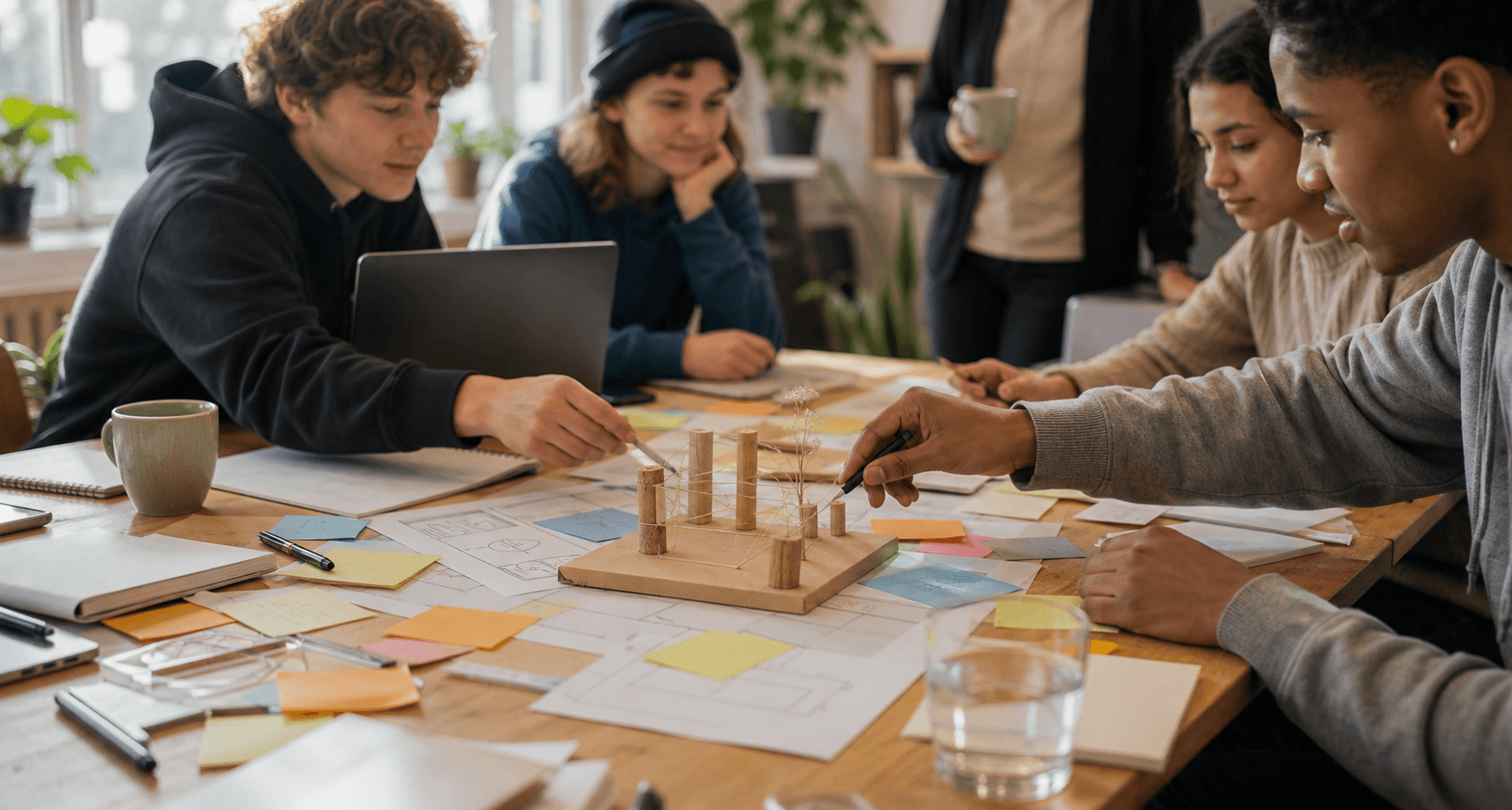
In STEP Idéverksted, the work starts with your interests and what you would like to develop. This might be redesigning clothes, organising an event, building a simple website or something completely different. What matters most is working on something you care about. Together with MIKS mentors, you explore the possibilities and develop an idea that can be tried out in practice.
You become part of a small group of 6-8 participants. You can work on your own idea or collaborate with one or more participants. The whole group can also choose to develop a shared idea.
Along the way, you explore who the idea is relevant to, plan the work and carry out the tasks. Feedback from others helps you develop the idea further. Through this work, you gain experience in collaboration, planning, problem-solving and delivery.
The programme lasts 12 weeks, with sessions on Mondays and Tuesdays from 09:00 - 14:00.
Who is it for?
STEP Idéverksted is for young people aged 16-24 who need a route into education, work or another activity, or support to stay in school.
You might have an interest you would like to explore, a project idea you want to develop, or want a regular activity and something meaningful to do with others. Both concrete ideas and a growing curiosity are good starting points.
The starting point is that you want to show up, explore possibilities and contribute to a group. The mentors help you find a direction and keep track of the work along the way.
What a day might look like
The days combine work on individual or shared ideas, practical tasks and creative activities. Breakfast and planning together provide a regular start to the day, with time for breaks, food and conversation along the way.
- 09:00 - 09:30Breakfast together
- A simple breakfast at our premises and a calm start to the day.
- 09:30 - 10:00Planning
- Together, we review the work from last time and the activities for today. Participants plan which tasks they will work on.
- 10:00 - 11:30Practical work and developing ideas
- Work on the ideas, shared activities and creative exercises. The mentors provide support and suggestions.
- 11:30 - 12:00Lunch break
- A shared lunch break.
- 12:00 - 14:00Further work and reflection
- Work on the ideas continues. Towards the end of the day, we review what has been done and clarify the next steps.
Some days include visits to businesses, outings and other shared activities that provide inspiration and experience for developing the ideas. For these activities, MIKS arranges transport to and from our premises.
The content varies depending on the projects and how far the participants have progressed. There is room for short breaks when needed.
From an interest to trying out an idea
What might the 12 weeks look like in practice? Here is an example in which a participant interested in clothes, photography and reuse wants to make second-hand clothes more appealing to other young people.
The idea develops into a small display with a clothes rack, selected garments and styling suggestions. Throughout the programme, the work alternates between exploring, planning, making and testing.
- Weeks 1 - 2Getting started and choosing an idea
- Participants get to know each other and explore interests and ideas. In this example, clothes, photography and reuse become the starting point for the project.
- Weeks 3 - 4Audience and needs
- Conversations with other young people provide insight into what they look for when choosing clothes, and what might make reuse more appealing.
- Week 5Shaping the idea
- The idea takes shape through sketches and suggestions for presenting the clothes. The aim is to make it easier to find second-hand garments that suit your own style.
- Week 6Planning
- A simple plan provides an overview of clothes, equipment, costs and tasks. The time and place for trying out the idea are agreed with the mentor.
- Weeks 7 - 9Putting the idea into practice
- Garments are selected and combined into outfits. Styling suggestions, photographs and the presentation are prepared for testing.
- Weeks 10 - 11Testing and adjusting
- Other young people are invited to look at the clothes and give feedback. Comments on the selection, sizes and presentation are used to develop the idea further.
- Week 12Reflection and next steps
- Participants present their work and reflect on their experiences. Each participant makes an individual plan for the future with their mentor, and the group celebrates the completion together.
This is an example. The ideas, activities and pace are adapted to the participants. The project can be developed individually, with others or as a shared idea for the whole group.
From an interest to your own idea
In STEP Idéverksted, the work starts with your interests and what you would like to develop. This might be redesigning clothes, organising an event, building a simple website or something completely different. What matters most is working on something you care about. Together with MIKS mentors, you explore the possibilities and develop an idea that can be tried out in practice.
You become part of a small group of 6-8 pupils. You can work on your own idea or collaborate with one or more of the others. The whole group can also choose to develop a shared idea.
Along the way, you explore who the idea is relevant to, plan the work and carry out the tasks. Feedback from others helps you develop the idea further. Through this work, you gain experience in collaboration, planning, problem-solving and delivery.
The programme lasts 20 weeks, with one session a week on Fridays from 09:00 - 14:00.
Who is it for?
STEP Idéverksted is for pupils in lower secondary school, preferably in Year 10, who may benefit from an alternative school day with practical tasks and close support.
You might enjoy learning through practical work, want more variety in your school week, or have an interest you would like to explore. Both concrete ideas and a growing curiosity are good starting points.
The starting point is that you want to show up, explore possibilities and contribute to a group. The mentors help you find a direction and keep track of the work along the way.
The programme is connected to your school life through collaboration with your school and parents or guardians. The aim is to build motivation and a sense of achievement, and support the transition to upper secondary education.
What a day might look like
The days combine work on individual or shared ideas, practical tasks and creative activities. Breakfast and planning together provide a regular start to the day, with time for breaks, food and conversation along the way.
- 09:00 - 09:30Breakfast together
- A simple breakfast at our premises and a calm start to the day.
- 09:30 - 10:00Planning
- Together, we review the work from last time and the activities for today. Pupils plan which tasks they will work on.
- 10:00 - 11:30Practical work and developing ideas
- Work on the ideas, shared activities and creative exercises. The mentors provide support and suggestions.
- 11:30 - 12:00Lunch break
- A shared lunch break.
- 12:00 - 14:00Further work and reflection
- Work on the ideas continues. Towards the end of the day, we review what has been done and clarify the next steps.
Some days include visits to businesses, outings and other shared activities that provide inspiration and experience for developing the ideas. For these activities, MIKS arranges transport to and from our premises.
The content varies depending on the projects and how far the pupils have progressed. There is room for short breaks when needed.
From an interest to trying out an idea
What might the 20 weeks look like in practice? Here is an example in which a pupil interested in clothes, photography and reuse wants to make second-hand clothes more appealing to other young people.
The idea develops into a small display with a clothes rack, selected garments and styling suggestions. Throughout the programme, the work alternates between exploring, planning, making and testing.
- Weeks 1 - 3Getting started and choosing an idea
- Pupils get to know each other and explore interests and ideas. In this example, clothes, photography and reuse become the starting point for the project.
- Weeks 4 - 6Audience and needs
- Conversations with other young people provide insight into what they look for when choosing clothes, and what might make reuse more appealing.
- Weeks 7 - 9Shaping the idea
- The idea takes shape through sketches and suggestions for presenting the clothes. The aim is to make it easier to find second-hand garments that suit your own style.
- Weeks 10 - 12Planning
- A simple plan provides an overview of clothes, equipment, costs and tasks. The time and place for trying out the idea are agreed with the mentor.
- Weeks 13 - 16Putting the idea into practice
- Garments are selected and combined into outfits. Styling suggestions, photographs and the presentation are prepared for testing.
- Weeks 17 - 20Testing and next steps
- The clothes are presented to other young people, and the feedback is used to refine the idea. Each pupil reflects on their experiences and makes an individual plan for the future with their mentor. The group celebrates the completion together.
This is an example. The ideas, activities and pace are adapted to the pupils. The project can be developed individually, with others or as a shared idea for the whole group.