STEP

Supported steps towards education, work and meaningful activity

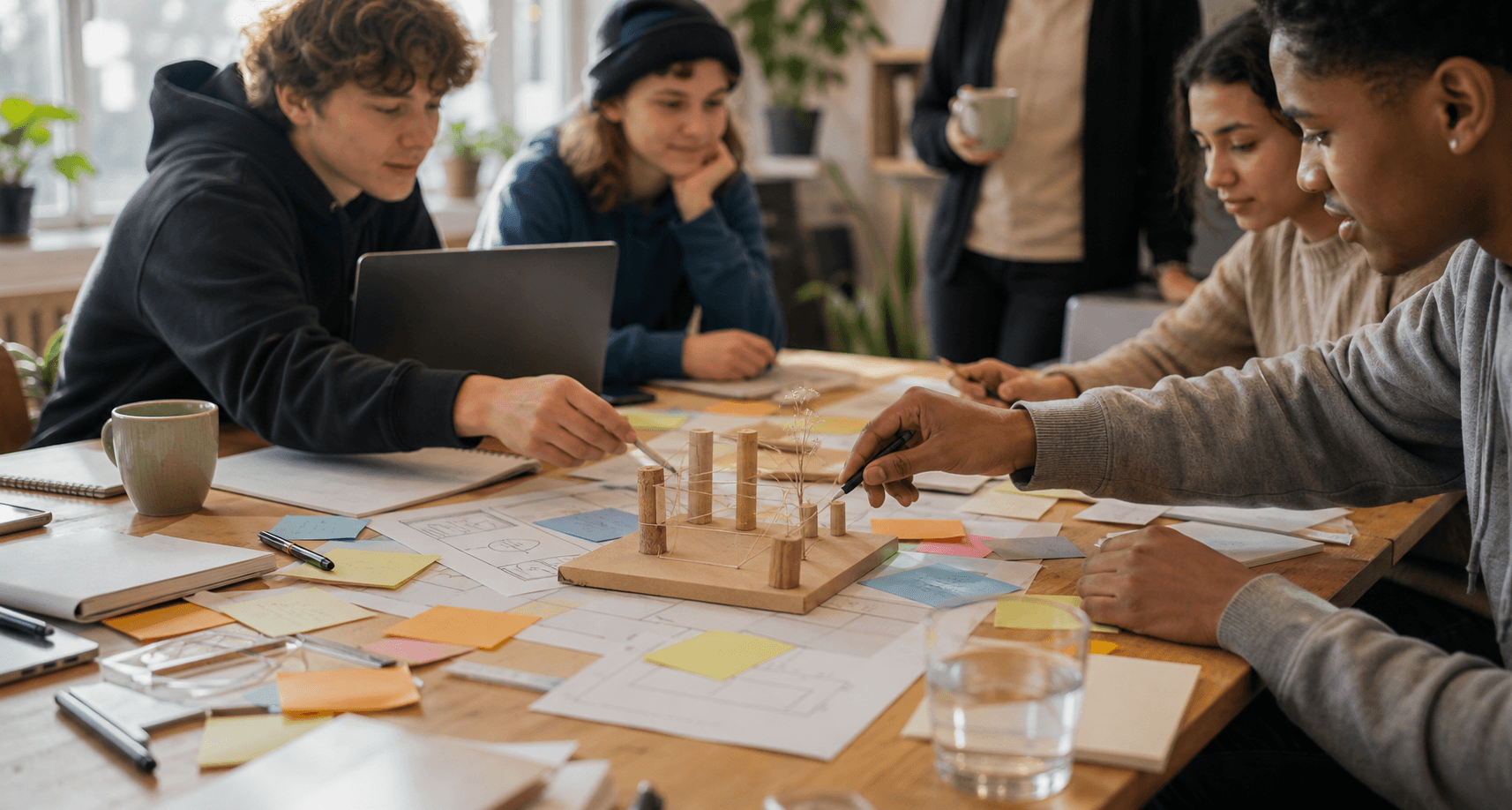
STEP is MIKS Ressurssenter's programme for young people, primarily those aged 16 to 24. Through practical experience, collaboration and guidance, you can explore your strengths, build new skills and find a way forward that works for you.

One shared model, different paths

The STEP programmes have different content, but they are built on the same model. Participants work on something concrete and meaningful, moving step by step from exploration to planning, testing and delivery. There is room to try, adjust and discover what works along the way.

The approach combines clear structures with practical activity and participation. Through the process, participants gain experience in collaboration, communication, responsibility, problem-solving and taking something from idea to action.

  1. Find a direction

    We start by getting to know one another, exploring interests and finding something meaningful to develop further.

  2. Understand who it is for

    Participants explore who the idea, project or assignment should create value for, and what those people actually need.

  3. From idea to action

    The work is divided into manageable steps. Participants plan, share responsibility, test solutions and adjust along the way.

  4. Reflect and look ahead

    We bring the experiences together, consider what worked and what was learned, and use this as a starting point for the next step.

STEP is grounded in professional knowledge and practical experience.

STEP has been developed from established methods for entrepreneurial learning, motivation and achievement, combined with experience from practical and relational work with young people. The model was developed and tested by MIKS Ressurssenter and AE2O through Erasmus+.

From idea to action

STEP draws structure from Disciplined Entrepreneurship, developed by Bill Aulet at MIT. The framework offers a systematic path from understanding a need and developing an idea to testing solutions in practice. In STEP, the methodology has been simplified and adapted for young people and practical learning.

Motivation and achievement

The approach draws on knowledge about what supports motivation, achievement and belief in one's own potential. Participants influence the work, experience progress through manageable steps and see that effort can lead to development.

Safety and relationships

Safe relationships and predictable structures are part of the model itself. There should be room to feel uncertain, try, adjust and learn with others.

STEP was developed by MIKS Ressurssenter and AE2O through an Erasmus+ collaboration in 2025. The model was co-developed with young people and tested in Norway and Portugal. Experience from the pilots influenced the language, pace, working methods and structure of the model.

Would you like to explore the model in more depth?

At projectstep.no, you can find the complete STEP model, methodology, modules and background to the development work.

Read more at projectstep.no